
1. Introduction
Commercial HVAC (Heating, Ventilation, and Air Conditioning) systems are essential infrastructure for offices, retail spaces, hospitals, schools, factories, and data centers. They maintain indoor comfort, control humidity, improve air quality, and ensure adequate ventilation. When these systems fail, the consequences can include operational downtime, occupant discomfort, energy waste, and even safety issues.
This article provides a comprehensive overview of commercial HVAC repair — including diagnostics, repair execution, failure prevention, budgeting, and contractor selection. The main focus is to provide genuine value to facility managers, building owners, and operations teams, while remaining optimized for both readers and search engines.
By the end, you’ll have a complete, practical guide to maintaining and repairing your commercial HVAC systems effectively.
2. Why Commercial HVAC Repair Matters
2.1 Role of HVAC in Commercial Buildings
-
Ensures occupant comfort (temperature and humidity)
-
Maintains indoor air quality and ventilation
-
Protects sensitive equipment (e.g., servers, labs, electronics)
-
Ensures compliance with building codes and health regulations
-
Reduces energy waste — HVAC often accounts for 30–50% of a building’s total energy use
When an HVAC system fails or operates inefficiently, energy bills rise, equipment life shortens, and occupant comfort decreases — leading to higher long-term costs.
2.2 Impact of Poorly Maintained Systems
-
Unplanned outages and downtime
-
Frequent complaints from occupants
-
Higher repair expenses due to neglected maintenance
-
Excessive energy use
-
Reduced system lifespan
Repairing your HVAC system is not only about fixing what’s broken — it’s about restoring performance, preventing future issues, and maintaining long-term efficiency.
3. Common Problems in Commercial HVAC Systems
| Component | Common Problems | Root Causes / Mechanisms |
|---|---|---|
| Compressors / Condensers | Breakdown, vibration, overheating | Refrigerant leaks, electrical faults, dirty coils, poor lubrication |
| Air Handlers / Fans | Motor failure, fan damage, airflow reduction | Bearing wear, dust buildup, belt failure |
| Coils (Evaporator / Condenser) | Dirt, corrosion, icing | Lack of cleaning, refrigerant issues |
| Controls / Thermostats | Sensor drift, control failure | Calibration errors, software glitches, wiring faults |
| Ductwork | Leaks, poor insulation, blockages | Physical damage, improper sealing, debris |
| Refrigerant Lines | Low charge, leaks | Seal deterioration, corrosion |
| Electrical Components | Faulty wiring, breaker trips | Loose connections, overload, old parts |
| Humidifiers / Dehumidifiers | Poor humidity control | Scale buildup, control failure |
Recognizing these issues early helps prioritize repairs and communicate clearly with technicians.
4. Signs You Need Commercial HVAC Repair
Early detection can prevent major breakdowns. Watch for these warning signs:
-
Sharp rise in energy bills
-
Uneven temperatures in rooms or zones
-
Strange noises: grinding, squealing, or rattling
-
Vibration or shaking
-
Weak airflow or poor ventilation
-
Frequent system cycling
-
Unusual odors or smoke smell
-
Condensation, water leaks, or humidity issues
-
System alarms or error codes
If one or more of these signs appear, schedule a commercial HVAC repair as soon as possible.
5. The Commercial HVAC Repair Process
A structured, professional process ensures consistent results and long-term reliability.
5.1 System Assessment & Diagnostics
-
Gather system documentation (model numbers, schematics)
-
Review maintenance and service logs
-
Interview building staff about issues and timing
-
Perform a detailed visual inspection
-
Use diagnostic tools (thermometers, gauges, electrical meters, airflow testers)
5.2 Root Cause Analysis
-
Identify underlying issues instead of surface symptoms
-
Verify secondary faults (e.g., belt damage due to misalignment)
-
Avoid temporary “patch” repairs that ignore root causes
5.3 Planning & Quotation
-
Prepare a list of parts and labor
-
Estimate repair time and budget
-
Communicate repair scope, schedule, and expected downtime
5.4 Execution of Repair
-
Follow all safety procedures and disconnect power
-
Replace or repair faulty components (compressor, motor, fan, etc.)
-
Clean coils and filters
-
Recalibrate sensors and thermostats
-
Refill or replace refrigerant
-
Test for leaks and verify operation
5.5 System Testing & Commissioning
-
Run tests under normal and heavy loads
-
Check electrical draw, air pressure, and cooling/heating output
-
Verify system performance and control accuracy
-
Record final test results
5.6 Post-Repair Monitoring
-
Monitor performance for several weeks
-
Watch for recurring issues or energy spikes
-
Adjust and fine-tune settings if necessary
This approach ensures quality, reliability, and documented accountability.
6. Preventive Maintenance vs Reactive Repair
Preventive maintenance keeps systems efficient and minimizes emergency calls.
6.1 Benefits of Preventive Maintenance
-
Fewer unplanned breakdowns
-
Lower repair costs
-
Improved energy efficiency
-
Extended equipment lifespan
-
Better indoor comfort and air quality
6.2 Common Preventive Maintenance Tasks
-
Quarterly or biannual inspections
-
Cleaning and replacing air filters
-
Coil and drain line cleaning
-
Lubricating bearings and moving parts
-
Checking refrigerant levels and pressures
-
Tightening electrical connections
-
Duct inspection and sealing
-
Calibrating sensors and thermostats
-
Testing safety controls and alarms
6.3 Predictive / Condition-Based Maintenance
Predictive maintenance uses sensors, vibration analysis, and thermal data to anticipate failures before they occur — ideal for large facilities or critical operations.
7. Cost Factors & Budgeting for Repair
Understanding costs helps with smarter planning and negotiation.
7.1 Cost Components
-
Labor and technician hours
-
Replacement parts and materials
-
Refrigerant refills
-
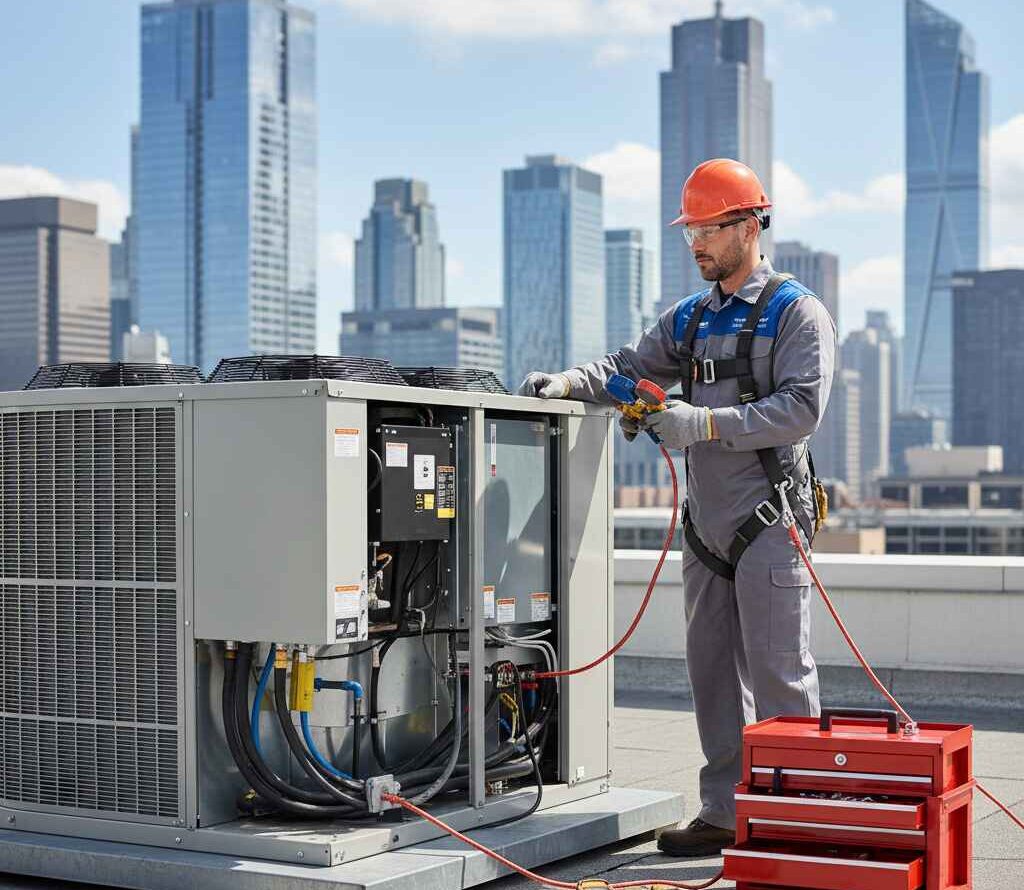
Equipment rental or access setup (e.g., rooftop units)
-
Diagnostic and testing fees
-
Waste disposal
-
Downtime costs or business losses
7.2 Cost Drivers
-
System age and complexity
-
Accessibility (roof, basement, mechanical room)
-
Urgency (emergency vs scheduled repair)
-
Regulatory and safety requirements
7.3 Budget Planning Tips
-
Keep a contingency margin (10–20%)
-
Track repair history and costs
-
Include preventive maintenance in annual budgets
-
Evaluate repair vs replacement ROI
7.4 Return on Investment
Effective commercial HVAC repair reduces long-term energy use, prevents major failures, and extends overall system life.
8. Equipment Lifespan, Replacement, and Upgrades
Even the best systems eventually reach end-of-life. Knowing when to repair or replace is crucial.
8.1 Typical Lifespans
-
Rooftop Units: 15–20 years
-
Chillers: 15–25 years
-
Boilers: 15–30 years
-
Air Handlers: 15–20 years
-
Condensers: 10–20 years
8.2 When to Replace Instead of Repair
-
Frequent or costly breakdowns
-
Obsolete components or refrigerants
-
Excessive energy consumption
-
Non-compliance with new regulations
-
Better efficiency available with modern systems
8.3 Phased Upgrade Strategies
-
Replace major modules first
-
Use modular or retrofit-compatible systems
-
Schedule upgrades during off-peak seasons
Timely replacement avoids expensive emergency downtime.
9. Choosing a Commercial HVAC Repair Contractor
The contractor you choose determines the reliability of your system.
9.1 What to Look For
-
Proper licensing, insurance, and safety certifications
-
Proven commercial experience
-
Positive customer references
-
Availability of emergency services
-
Transparent quotes and itemized billing
-
Skilled, trained technicians
-
Emphasis on preventive maintenance
9.2 Questions to Ask
-
Can you show similar completed projects?
-
What is your typical response time for emergencies?
-
How do you warranty parts and labor?
-
What is included in your diagnostic report?
-
Do you provide performance verification after repair?
9.3 Contract & Service Agreement Options
-
Fixed-price maintenance contracts
-
Time & materials agreements with spending caps
-
Performance-based contracts (efficiency or uptime targets)
-
Scheduled preventive maintenance SLAs
A good contractor should act as a partner, not just a service provider.
10. Trends and Future Technologies in HVAC Repair
The HVAC industry is evolving quickly, with innovations that improve efficiency and reliability.
10.1 Smart Controls & IoT Monitoring
Smart thermostats, cloud-based dashboards, and AI analytics allow for predictive repair scheduling and real-time fault detection.
10.2 Variable Refrigerant Flow (VRF) & Variable Air Volume (VAV)
These systems offer higher energy efficiency and flexible zoning but require precise installation and diagnostics.
10.3 Environmentally Friendly Refrigerants
New refrigerants reduce environmental impact and improve performance compared to older compounds.
10.4 Energy & Heat Recovery Systems
Modern HVAC units can reclaim waste heat or cooling to reduce energy consumption.
10.5 Machine Learning & Automation
AI tools optimize HVAC setpoints, predict component wear, and reduce manual maintenance intervention.
10.6 Hybrid Retrofits
Integrating new smart components into older systems improves performance without full replacement.
11. Real-World Examples
11.1 Office Tower Rooftop Unit Repair
Situation: A high-rise office tower experienced uneven cooling.
Diagnostics: Condenser coil blockage and low refrigerant detected.
Repair: Replaced compressor, repaired leak, cleaned coils, recalibrated controls.
Result: Restored cooling, reduced energy use by 8%, and improved occupant comfort.
11.2 Retail Mall Air Handler Replacement
Situation: Air handler failure led to poor airflow in one zone.
Diagnostics: Motor bearings seized from misalignment.
Repair: Replaced motor, rebalanced fan blades, cleaned ducts.
Result: Improved efficiency, noise reduction, and airflow restoration.
12. Conclusion & Best Practices
12.1 Key Takeaways
-
Commercial HVAC repair is vital to comfort, safety, and efficiency.
-
Detect issues early and follow structured diagnostic procedures.
-
Preventive and predictive maintenance minimize emergencies.
-
Choose contractors with verified commercial experience.
-
Stay informed about technology and environmental regulations.
12.2 Best Practices Checklist
-
Keep detailed maintenance and service logs
-
Perform regular inspections
-
Repair root causes, not symptoms
-
Stock critical spare parts
-
Test system after every repair
-
Monitor energy use for performance trends
-
Review contractor agreements annually
-
Upgrade aging systems strategically
By following these best practices, your commercial HVAC repair program will be reliable, cost-effective, and future-ready.